Showing posts with label baverse. Show all posts

July 12, 2012

The Jaffa Post

Shortly after the roaring success of gtoosphere’s research on the complete history and etymology of the word ‘Bavarse’, we (@satwikg and I) have embarked upon the ambitious project of identifying similar PG-13 Telugu words to research their history and etymology. We started making a list of curse words you can say on Television and get away with it. The first word that came to my mind was ‘Jaffa’.

Jaffa is a beautiful word that is poetic to the lips and mellifluous to the ear. And it is versatile too – you can use it as a greeting (నిన్నేరా జఫ్ఫా!), you can stretch it (Jaffaaaaa...), you can stress on it (Jafffffffa), you can bend it, you can twist it, you can conjoin with other words (పెద్ద లఫూట్-జఫ్ఫా గాడిలా ఉన్నాడు!) or you can just add gibberish to it and it would still make sense to you (జఫ్ఫా నా డఫ్ఫా!)

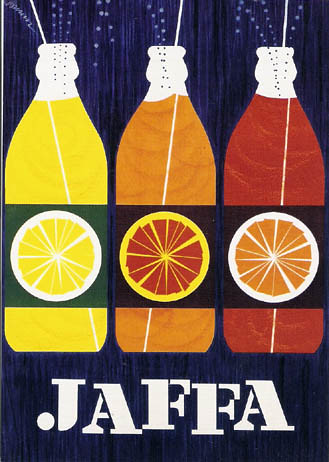
Whatever you do, however you change it, it carries its profound essence everywhere. That is magic of Jaffa. When you say “Jaffa na Daffa!”, it instantly appeals to the masses. If you’re in a five star hotel and you want to use it in a classy way, say it in a French accent, Je ffa. Now how many words can boast of such malleability?

I am sure anyone who is even remotely gult is aware of the the beauty, the simplicity and the many forms of Jaffa. I am sure all your Facebook walls are inundated with a lot of Jaffa based humor. However, I have noticed a few instances where the word Jaffa is misused or overused, often in the wrong context. This made me realize that my gult brethren seem to be confused about its real meaning and usage. So I have taken the responsibility of educating you all.

Chapter 1: జగమంతా జఫ్ఫామయం || Jagamantha Jaffamayam

Jaffa may sound like a Telugu word but the word is well known and used across four continents in more than a dozen countries around the world. Here are some of the occurrences of the word Jaffa in other languages and contexts. (Most of the images are cropped screen shots with original sources linked somewhere in the vicinity) 

1. Jaffa is a Rich Technology
The URL says it all: http://jaffa.sourceforge.net/

Jaffa 2.1 already released anta... crazy technology yaar!
"వీడెవడో తెలీదు కానీ, పెద్ద జఫ్ఫా టు పాయింట్ వన్ డాట్ జార్ లా ఉన్నాడు" -- తిట్టు బాగుంది కదూ? ;)

2. Jaffa is a Historical City: 
Jaffa is an ancient port city believed to be one of the oldest in the world. Jaffa is famous for its association with the biblical story of the prophet Jonah. It is now part of Tel Aviv in modern day Israel. It was also mentioned in The Bible:

Biblical Jaffa anta... Wikipedia kooda manchi comedy chesthundi appudappudu :)

3. The Battle of Jaffa
The Battle of Jaffa took place during the Crusades in 1192, as one of a series of campaigns between Saladin's army and the forces of King Richard the Lionheart. It was the final battle of the Third Crusade, after which Saladin and King Richard were able to negotiate a truce and the Treaty of Jaffa was signed. Read more on Wikipedia...

4. Jaffa is an Orange
The Jaffa orange is a sweet, almost seedless orange variety. Originally developed by Arab farmers in the mid-19th century, it takes its name from the city of Jaffa where it was first produced for export.


5. Jaffa Cola:
From Wikipedia again:


6. Cricket Jaffa
Apparently Jaffa is also a cricket term. Found this entry in the Glossary of Cricket Terms:

7. Jaffa Cakes
These Jaffa oranges are apparently awesome. Jaffa Orange flavored cakes, biscuits and other forms of confectionery are hugely popular across the world. Jaffa cakes are the most popular of them all. The company that makes these cakes interestingly won a court case after proving in a court that Jaffa cakes are indeed biscuits!

8. Jaffa Cafe
There is a popular Jaffa Cafe in California taking the profound presence of Jaffa across the Atlantic as well.

9. Jaffa (film)
The Telugu movie wouldn't be the first movie titled 'Jaffa' Here is an ABSORBING and TOUCHING love story with an IMDB rating of 7.0


10. Jaffaavataraalu (జఫ్ఫావతారాలు)
Eeyanevaro Sir Max Jaffa anta

And finally, Professor Jaffa


11. Bonus Jaffa
Jaffa is a slang term (usually pejorative) for a resident of Auckland, New Zealand. It is the acronym for Just Another Fuckwit from Aucklander and is used as an insult to Aucklanders. Auckland is also sometimes referred to as Jaffisthan!

As we have seen, Jaffa as a word has been in use for thousands of years across all civilizations, cultures, countries and products. So what does it actually mean? How did this come up in Telugu? So what does it mean when one person calls another Jaffa? (ivanni chadavandi chinna break taravata :P)

Chapter 2: But what does it mean?

To find out the real truth, I moved beyond the safety of Wikipedia and ventured into the shadier corners of Urban Dictionary and even hostile foreign territories like the third page of Google search results. You can take it from me that the most accurate definition seems to be:
Jaffa: (noun) A person with "seedless" sperm i.e. a person who "fires blanks" or having "no lead in his pencil" i.e. “Pooja ki paniki raani puvvu”
Apparently it is a fairly popular street slang in the UK and Ireland, especially in the docks. It makes sense in a lot of ways. Now that I think of it, the word Jaffa even sounds a little impotent (not to be confused with the word 'important' which our English teacher in Sri Chaitanya used to pronounce as 'impotent'. Example: "impotent koschens raaskondamma")

The origin of the slang lays in Jaffa the Orange. The Jaffa orange has very small seeds, so small that it is considered to be the first seedless orange when it was developed by Arab farmers in the mid nineteenth century. This term in this context either gained prominence from or was invented for the British TV sitcom Only Fools and Horses in the 1990s.

And that is how, I am guessing, it made its way into the Telugu vocabulary.

Chapter 3: Future Work

Only five years back, the word Jaffa didn’t even exist in the minds of Telugu people. Clearly, it caught on only because of the movies. The great Brahmanandam deserves a lot of credit for the immense popularity of the word.


The earliest recorded use of this word from my memory was in the 2008 movie “Gamyam” in which Allari Naresh casually says something like, “Jaffa na jafada”. My knowledge of Telugu movies is nothing to boast of and I would like the readers to suggest any occurrences of this word at an earlier date.

Chapter 4: Epilogue

So here we have, a Telugu swear word that has its origins in Hebrew! How cool is that? Researching on the meaning and etymology of this word has been a really fun trip for me and the Hebrew roots really took me by surprise, just like the Persian roots of the word “Bavarse” did!

I hope you have all understood the history, the essence and the meaning of this beautiful word. I urge all fellow gults to use it wisely, in the right context and more importantly to not over-use it. Remember, words are only tools to create humor. A funny idea is the real meat.

Gultisthan Zindabad!

[Edit: @emailkran says that the word first used in the 2005 movie 'Party' starring Allari Naresh, Brahmanandam, Ravibabu etc.]

July 19, 2010

Part 2 of Baverse/Bewars - A complete History and Etymology

Satwik Continues...

Actor Ravi Teja from the movie Venky
where he plays a character that is often
looked  upon as a  personification of the
word bewars in Telugu pop-culture!
A lot of you have followed the part 1 of this article with great zest and enthusiasm. I should thank you for that. The response from Telugu people in the form of comments however, has been only average which reinforces my belief that Telugu people are too “bewars” to even care about it :p

In the previous article, however funny it might be, we were forced to rule out the possibility of bewars having an English origin. We were sort of lost in the wilderness for a short while after that but then, my aforementioned cousin g2 found some interesting evidence of the word having an Urdu origin in the Telugu Wikipedia in an article named “List of Urdu words adopted into the Telugu language.

Urdu or Kannada?

Among a number of Telugu words that were adopted from Urdu is a word బేవారసుBevaarasu”. None of us had a Telugu dictionary that enabled us learn the meaning of this word. Upon further read-through, I found that the word Bewarsi was Kannada for Bastard along with the word Boli Maga. I intimated this information to my cousin without delay.

My cousin g2, a more conscientious person no doubt, was at this point continuing his search. He replied informing me that in some parts of Andhra, the word in use was indeed bewarsi! The reader would do well to know that Andhra and Karnataka have shared very close ties since the time of the Vijayanagar Dynasty’s rule from the early 15th century AD. My shrewd readers would have obviously observed that this development indicated the fallibility of Wikipedia since it had indicated that the word’s origins lay in Urdu and this proof of Kannada origin! This is a huge blow for Wiki-worshippers like me!

No Wiki No Wiki No!

Blasphemy! How can wiki be wrong? I was thinking to myself. Slowly, I came out of denial to find everything I believed in crashing down in a matter of minutes just because one stupid word! I started to hate the word bewars, my new job, everything around me, my life and my very existence. I was like a dumb American kid who just realized Santa does not exist! I was contemplating suicide but I decided to check my mail one last time before taking the extreme step and there was mail from g2 which, I hate to admit, saved my life.

The mail read as follows:

The Mail

Dear esteemed cousin,
Congratulations on finding the Kannada root for our dear Telugu word, Bewars. Although the Kannada root essentially answers all the sneaking doubts we have had over the last two days, I must tell you, I was not convinced about it. With the limited evidence we have, we cannot rule out the possibility of that both Kannada and Telugu words have a common Urdu origin because a significant part of Karnataka was under the Nizam’s influence too.
My friend, Sharjeel Imam.
(A pipe would have looked
more intellectual but we'll
settle for a Cuban :p)
So I could not help but cogitate at one level further. And I am happy to announce that I have satisfactorily and rightfully arrived at the complete etymology of the word and for this I must thank my esteemed friend, Mr. Sharjeel Imam who patiently guided me with his thorough knowledge of Urdu, Persian and Arabic languages even though it is of little personal interest to him.
I am outlining the complete etymology that I have arrived at through the series of steps.
1. Waaris in both Arabic and Persian means the rightful heir of property. (The Telugu word “varasudu” also came from the same Arabic root!)
2. A word in Arabic can be negated by adding the prefix La-
3. So, Lawaaris in Arabic would mean one who does not have a rightful heir i.e. stray. A lawaaris kid would mean "a bastard". It is interesting to note that lawaaris in Hindi means bastard! (an indication that we are on the right track)
4. In Persian, a root word can be negated by adding the prefix be- (examples bebas, bekaar etc.)
5. So in Persian, a word for bastard would be Bewaaris (which is also an Urdu word for bastard).
6. So the Urdu word Bewaaris became bevarsi in Kannada and bewars in Telugu.
7. So technically the word bewars in Telugu means bastard!
Thus I presenting my findings marking the end of an excellent and fruitful journey. It has been an honor researching with you. I hope to be a part of more such wonderful endeavors.
--
Your brilliant friend and cousin,
Jayanth Tadinada alias g2 (of gtoosphere fame)

We had assumed that the word, due to its regional popularity and brilliant sonic capabilities had its origins in Urdu. And Lo! That is the answer! Wikipedia was right… Our faith is restored! Dear God, please thank g2 on my behalf for he saved my life – yet again!

Epilogue

My friends, thus with great enthusiasm, I thus announce the etymological roots of Bewars! It has been a short and arduous journey, but a fruitful one nonetheless! This brilliant word, my dear readers, offers another mystery. While most words borrowed from other languages are subject to hyper standardization; for instance, In German, the word ‘uber’ means super, but in English we use it as a superlative to ‘super’; The word Bewars upon entry into Telugu has been subject to a slight sobriety that has undermined its offensive nature rendering itself to the wonderful and varied usage that we see around ourselves today! (Or in other words, it is very PG-13 unlike the Urdu word it comes from!)

I shall sign off in the words of the inimitable Arthur Conan Doyle, as spoken by Sherlock Holmes, no less: "When you have eliminated the impossible, whatever remains, however improbable, must be the truth".

Signed,
Satwik Gade

P.S: Fellow Telugu people, now that you know the etymology of this historical word; it is your moral duty to Share, tweet, re-share, re-tweet until every Telugu person on the face of this planet knows!

P.P.S: @Satwik, you asked me to "feel free" to edit the post. So technically it's your fault that you're suicidal :p -- g2

Note: We urge our Telugu readers to suggest more such intriguing words so we can find out their etymologies in a similar fashion :)

July 16, 2010

Baverse/ Bewars - A complete History and Etymology: part 1

Spoiler Alert

If you are from or lived briefly in Andhra Pradesh (or Karnataka) or at least slightly acquainted with Telugu (or Kannada) language you’ll find this very funny and informative. If not, you’ll find it very amusing!

What is Baverse?

A lot many people who don’t speak Telugu ask me the meaning of the word baverse all the time! Well it is not easy to explain a word like baverse because for me, it is not just a word. It’s an idea; it’s a way of life! Even as a kid, I have always been curious about its etymology. But no one knew where the word came from. I googled a lot but I just couldn’t find it anywhere!


The tipping point came a few days back when my cousin Satwik put his gtalk status message as Satwik Gade is a Certfied bewars! I suggested him that we do some research to find out the etymology of the word. I am proud to say we have cracked it and the results of our research will be published in this blog over the next two entries. The story of how the research unfolded in Satwik’s words:

Satwik Says...

“In spite of being the only two Telugu boys in NIFT, New Delhi, Anirudh Rao and I had very few conversations in our Native tongue. Our conversations comprised English sentences with throwaway references to all things Telugu uttered in the appropriate slang. On one such occasion, although I now forget the context, Rao exclaimed, “If we do that, they will surely know we are completely Bewars.” Now, being a person with an acute interest in etymologies – I own about six copies of The Dictionary of Word Origins in both Telugu and English at various stages of updation - I asked him if he might know where the word Bewars comes from.

If you are Telugu or have lived in Andhra you would surely have heard this word from your friends or not very well wishers at a very nascent stage of mental maturity and would have grasped it and used it and reused it time and again (the way the word feels against your tongue is just short of orgasmic) without once thinking about its origin. Being a man of the above description, Rao of course had no idea and being a senior he made humorous reference of bad taste about my nerdiness and left it at that.

Three years later, I posted a message on Buzz, updating my status to a ‘Certified Bewars’. g2, my friend and cousin suggested that the word bewars have a wiki page of its own. Being in complete agreement with him, I started to research the word bewars and this article is the result of this work in progress.

Initial Leads

The word’s popularity seems to be centered in no particular area in Andhra. However, it is used with particular zest in Hyderabad, so I had been, on earlier occasions, quick to assume that its origin lay in the Urdu language, not least because all Urdu words sit beautifully on the tongue and sound equally enchanting. But I soon found out upon, appropriate research in Lucknow and Allahabad; that the word does not belong in Urdu. Similar searches ruled out most of North India altogether. So once again, I returned to the point of origin which is Hyderabad.

In my Hyderabad office, on a lean day, work-wise, I sat at my desk and decided to take the cyber route to end this mystery. The reader might be thrilled to know that BEWARS is the abbreviation of the British Excavation and Archeological Research Society. Here, I received a bit of encourage when my brain allowed me to assume that the word might have had origins in the Indian opinion of British Archaeology. Of course this was all conjecture and thus I had to persist. So, the reader will, then, come across a few casual references to the word by various Telugu gentlemen around the world. Most of them are in appropriately bad taste and a few are worse where the respectful author deems it fit to call a colleague of mere acquaintance, a Bewars Lanja!

Upon still further search, I realized that it is a popular surname in Britain and America. Now, it is probable that a person of a distinguishable personality is seen often to lend his nomenclature to the personality itself. A proper noun example being: “That teacher is a Hitler” or “Stop monkeying around!” I decided to leave no stone unturned and check if any member of the Bevars/Bewars family had any connection, dubious or otherwise with India.


Dead End

Firstly, the answer is unfortunately, no. Secondly, the earliest reference to this name lies in the website www.ancestry.co.uk wherein I found that in 1820, a British couple, Antonie and Mary Bewars left for New York on a ship from a port in Germany. Upon further search I found http://boards.ancestry.com/thread.aspx?mv=flat&m=1&p=surnames.bevars where members of the Bevars family are attempting to contact other members of the Bevars family. A few excerpts from the page are given below for the amusements of readers who fully understand the meaning of bewars.

Juilee134: There are a few Bevars in the Lawrence county, in cemeteries.
L. J Clark: Hi, did you know there are very few bevars? We might be family.
Julie: Thank you, I am real bad at this stuff, but I keep trying. At one time my Bevars was Beavers, and then nothing.

Ad Bevars: "I don’t really know too much about my family history, other than (that) I was always told that the family was black foot Native American. It’s just so exciting to find more bevars people out there. We are few and far in between!"

Clearly Ad Bevars has never been to Andhra! Also another interesting person worth mentioning at this juncture is one Mr. Duffer Bevars ( the reader might be interested to know that an appropriate cyber slang here would be ROTFLMAO) who conducts his profession in matters relating to software engineering.

New Leads

After much amusement and online grave digging across of England and New York, we were forced to abandon the theory that the word is of British origin. Just when we have almost given up hope, a quick look into the urban dictionary has given us a new lead, that the word Bevarsi (which is very close to Bewars) is a Kannada slang word used by slum people in Karnataka. And at the same time g2 dug into the Telugu Wikipedia to find an article which listed all the Urdu words borrowed into the Telugu language and found another exciting lead there. With the two possible leads in less than an hour’s time, both of us initially came to the conclusion that the word is of Kannada origin but destiny had different plans with a new twist...!”

To be continued... in the mean time, share this with your Telugu friends :)